If you’re posting regularly on Instagram and still not seeing results, the problem usually isn’t effort — it’s strategy. A solid Instagram marketing strategy in 2026 isn’t about posting more; it’s about posting with purpose. I’ve seen this play out repeatedly while working on Instagram accounts for small businesses and personal brands across digital marketing, local services, and lifestyle niches — content planning, captions, Reels, engagement, all of it building toward one goal: real reach that turns into real inquiries.
Here’s what actually works, based on accounts I’ve managed directly, not just theory.
Table of Contents
A Real Turnaround: What Changed for One Small Business
One account I worked on had a familiar problem: inconsistent posting and low organic reach. Nothing was wrong with the business itself — just no system behind the content. Through a focused Instagram Marketing strategy, I identified the gaps and created a clearer content direction.
The fix wasn’t complicated. I introduced a consistent content plan, added engaging Reels, and tightened up the captions. This Instagram Marketing approach helped the account build more consistent content and stronger audience engagement. Within a few weeks, the account saw a noticeable increase in reach and engagement, along with more relevant enquiries coming directly from Instagram.
The lesson wasn’t “post more.” It was “post with a plan.” That distinction matters more in 2026 than ever. Effective Instagram Marketing isn’t simply about publishing frequently — it’s about choosing the right content, format, and message for your audience. Reels now reach roughly 2.25 times more users than single-image posts and about 1.36 times more than carousels, so the format you choose directly shapes how far your content travels.
My Content Planning Process
Here’s the actual process I used to build that consistency:
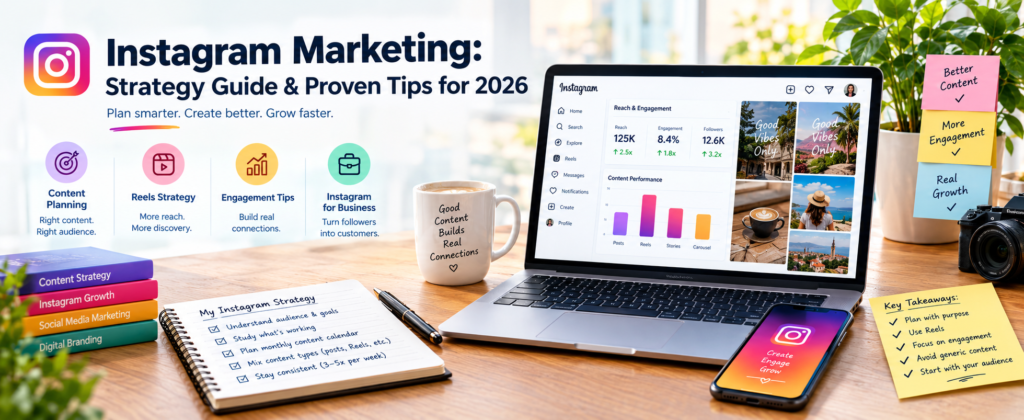
- Understand the audience and business goals first. Before creating anything, I look at who the content needs to reach and what the business actually wants from Instagram — leads, awareness, or both.
- Study what’s already working. I check which existing content is getting engagement and use that as a starting signal, not a guess.
- Build a monthly content calendar. This includes a mix of educational posts, Reels, promotional content, and audience-focused topics — not just product pushes.
- Plan for consistency, not volume. I generally aim for 3–5 posts per week. The focus is staying consistent, not maximizing quantity.
This structure works because it removes the guesswork. Instead of scrambling for ideas each week, there’s already a plan with variety built in.
Post Types: What to Mix Into Your Calendar
| Content Type | Purpose | Frequency Guide |
| Educational posts | Builds trust, answers audience questions | 1–2x/week |
| Reels | Drives reach and discovery | 2–3x/week |
| Promotional content | Converts interest into inquiries | 1x/week |
| Audience-focused topics | Builds relatability, encourages engagement | 1x/week |
This isn’t a rigid formula — it’s a starting mix. The ratio shifts depending on the account, but the variety itself is what keeps content from feeling repetitive.
The Mistake That Quietly Kills Reach
Here’s the pattern I see most often: businesses posting consistently without actually thinking about the audience.
Too much content focuses on promoting products or services directly, instead of creating something that educates, entertains, or solves a real problem. Posting regularly matters — but consistency without relevance still leads to low reach and low engagement. Instagram’s own engagement data backs this up: the average engagement rate has been declining industry-wide, which means generic, promotional content has less room for error than it used to.
The fix isn’t to post less. It’s to make sure each post earns its place in someone’s feed.
Where to Start If You’re Building From Zero in 2026
If you’re starting fresh, skip the hashtags and posting-time debates for now. Prioritize this instead: understand your audience and define what you actually want the account to achieve.
Before optimizing any of the smaller tactics, build content around the specific problems, questions, and interests of your target audience. Once that foundation is clear, everything else — including hashtags and timing — becomes far easier to figure out, because you’re no longer guessing what to post about in the first place.
FAQs
How many times a week should a small business post on Instagram?
3–5 posts per week is a solid, sustainable starting point. Consistency matters more than hitting a specific number.
Are Reels still worth prioritizing in 2026?
Yes. Reels continue to reach significantly more users than static posts or carousels, making them one of the most reliable formats for growing reach.
What’s the fastest way to improve a stagnant Instagram account?
Start with a content audit: identify whether posts are audience-focused or product-focused. Shifting the balance toward the audience’s actual problems is usually the quickest lever to pull.
Conclusion: Strategy Before Tactics
A strong Instagram marketing strategy in 2026 isn’t built on hashtags or perfect posting times — it’s built on understanding your audience and creating content that actually serves them. Get that foundation right, plan for consistency over volume, and the smaller tactics will fall into place far more easily.
Looking for freelance digital marketing in Thrissur to grow your business online? I provide practical digital marketing solutions designed to improve your online visibility, attract the right audience, and generate quality leads. From SEO and social media marketing to content marketing, Google Ads, and website optimization, I create strategies based on your business goals and target customers. Whether you’re a local business, startup, personal brand, or established company, freelance digital marketing can help you build a stronger online presence and create sustainable growth.